Start with the body.
Map the activity, joint movement, contact points, and areas of exposure. Turn each observation into a specific design question.
 COLLABORATE
OVERKOME / RESEARCH
A new relationship
between body and garment.
A research framework for clothing conceived as an extension of the body. Movement, material, and construction considered together.
Explore the six modulesMK.I / SYSTEM ARCHITECTURE
01APEX-SKINThe body interface02EXO-MOTIONDirectional textile structures03CORE-ARMORFlexible protective layers04QUANTUM-SHELLThe environmental interface05GRAVITY-LESSWeight and perceived load06FLUX-HYBRIDAdaptable configurationsSix complementary research directions.
One body at the center.
[ 01 ]THE RESEARCH QUESTION
Every joint moves differently. Every surface meets a different kind of contact. Every activity asks something different of a garment.
Human-Wear OS begins with those differences. Its framework maps textile structure, tension, coverage, and connection to the way a body moves and interacts with its surroundings.
Each module has a role. The research asks how it could function independently, alongside another layer, and as part of a complete wearable system.
Current stage: design framework and initial technical specifications. Prototyping and testing are the next steps.
[ 02 ]SIX MODULES / ONE FRAMEWORK
Open a module to explore its purpose, the design question, and what needs to be tested.
CONTACT / FIT / BREATHABILITY
Exploring anatomical panels, variable textile densities, breathable zones, and local cushioning at points of friction. A foundation intended to work on its own or beneath other layers.
TO VALIDATEFit across body shapes, freedom of movement, skin comfort, and behavior after repeated wear and washing.
TENSION / ARTICULATION / MOVEMENT
Studying elastic bands and articulated construction around the spine, hips, shoulders, knees, and ankles. The research considers how their placement and tension could interact with movement.
TO VALIDATEForce and stretch behavior, pressure distribution, movement range, fatigue, and comparisons with an unassisted baseline.
IMPACT / PLACEMENT / COMFORT
Exploring anatomically placed pads, graded densities, and flexible structures for selected areas of the body. Placement, bulk, and interaction with adjacent layers are part of the design problem.
TO VALIDATEImpact performance, coverage during movement, comfort, and durability. Protective performance would require appropriate testing before any claim.
ABRASION / EXPOSURE / AIRFLOW
Investigating abrasion-resistant panels, water-repellent finishes, and articulated outer-layer construction. The aim is to balance coverage with mobility and the exchange of heat and moisture.
TO VALIDATEAbrasion resistance, water repellency, breathability, and the durability of finishes through use and care.
MASS / DISTRIBUTION / EFFORT
Exploring lightweight structures and the distribution of material and carried weight across the body. The research focuses on physical load and the wearer’s experience of it.
TO VALIDATEGarment mass, load distribution, perceived effort, and fatigue under defined conditions. Any reduction remains a research objective.
CONNECTION / MODULARITY / USE
Investigating removable sleeves and hoods, interchangeable panels, and adaptable pockets. Each connection is considered as part of a coherent system of components.
TO VALIDATEConnection strength, ease of use, repeated assembly, fit, and compatibility between configurations.
These modules describe research intentions. Performance, assistance, fatigue reduction, and protection have not been demonstrated by the published design studies.
[ 03 ]FORM FOLLOWS THE QUESTION
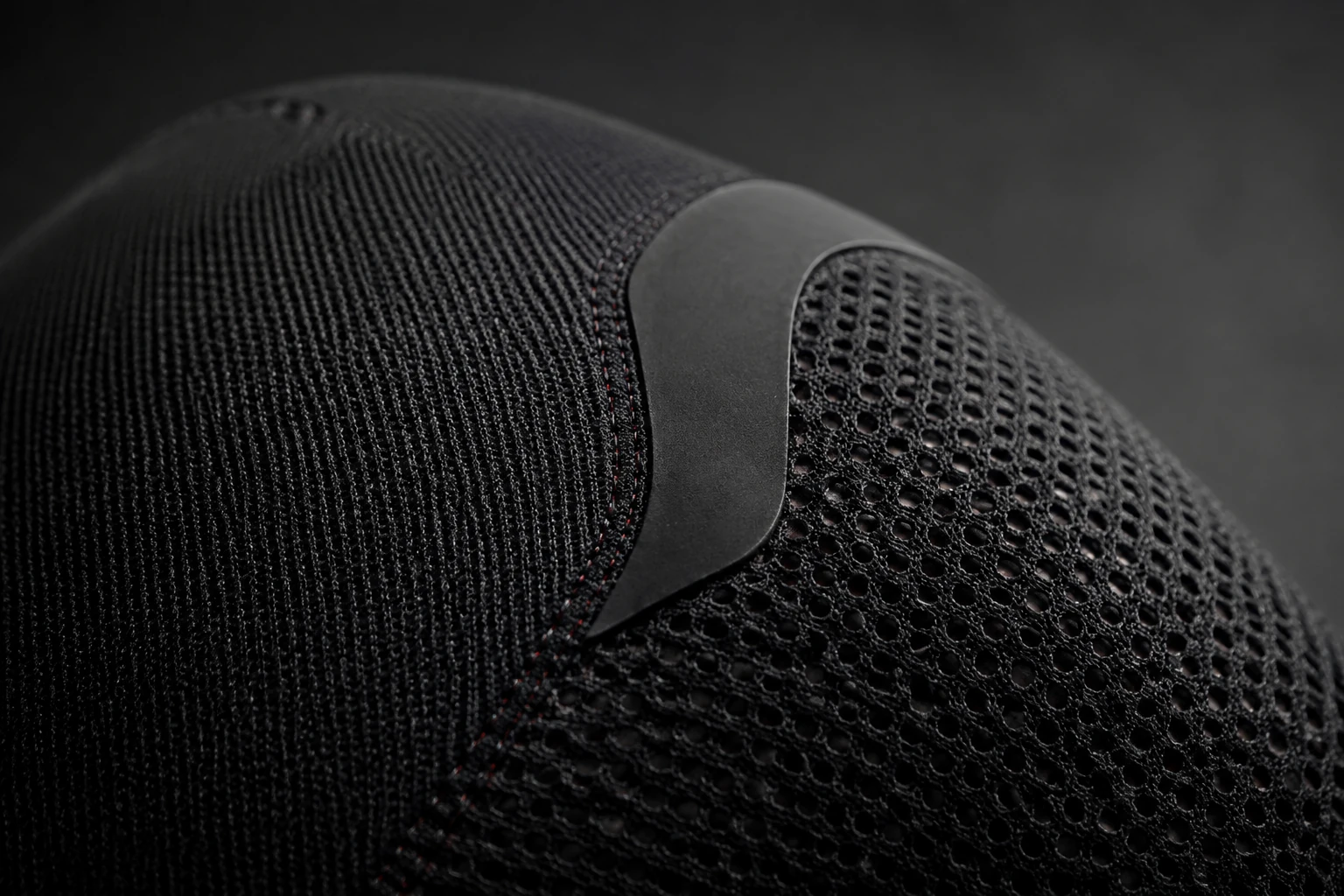
APEX-SKIN / MATERIAL STUDY
Variable knit densities, breathable zones, and soft contact surfaces.
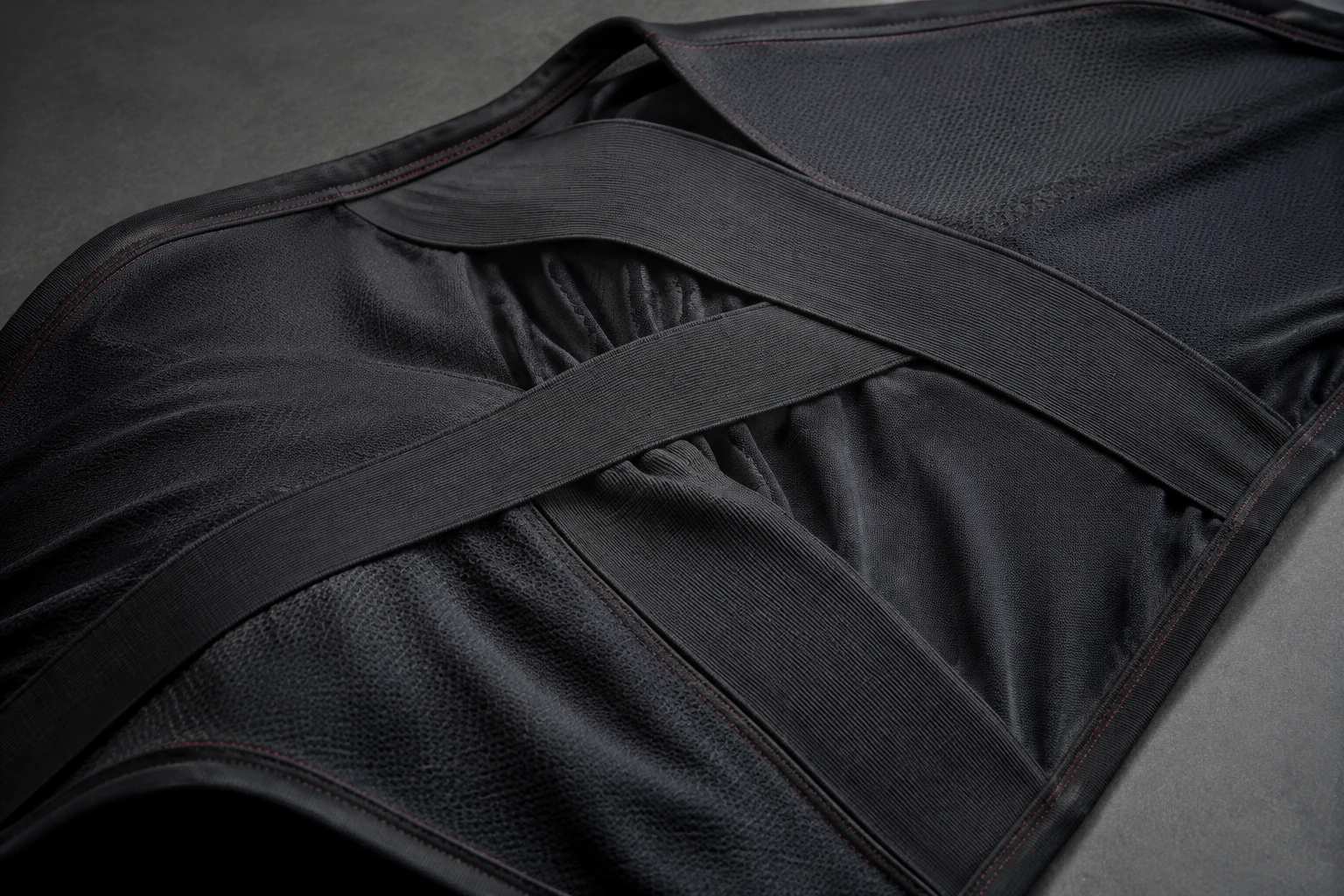
EXO-MOTION / MATERIAL STUDY
Flexible bands and articulated panels organized around movement.
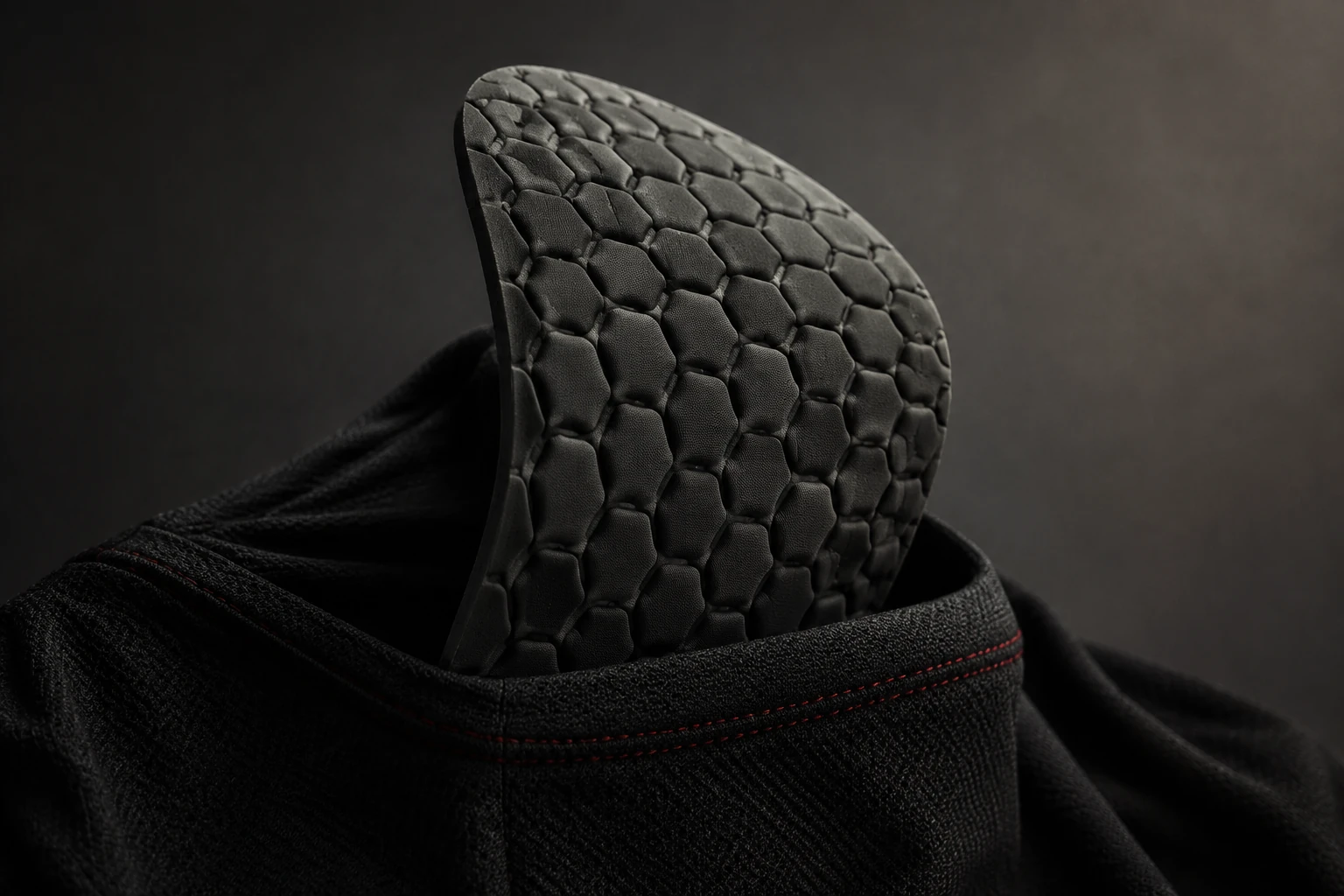
CORE-ARMOR / MATERIAL STUDY
Flexible cellular geometry and the interface between pad and garment.
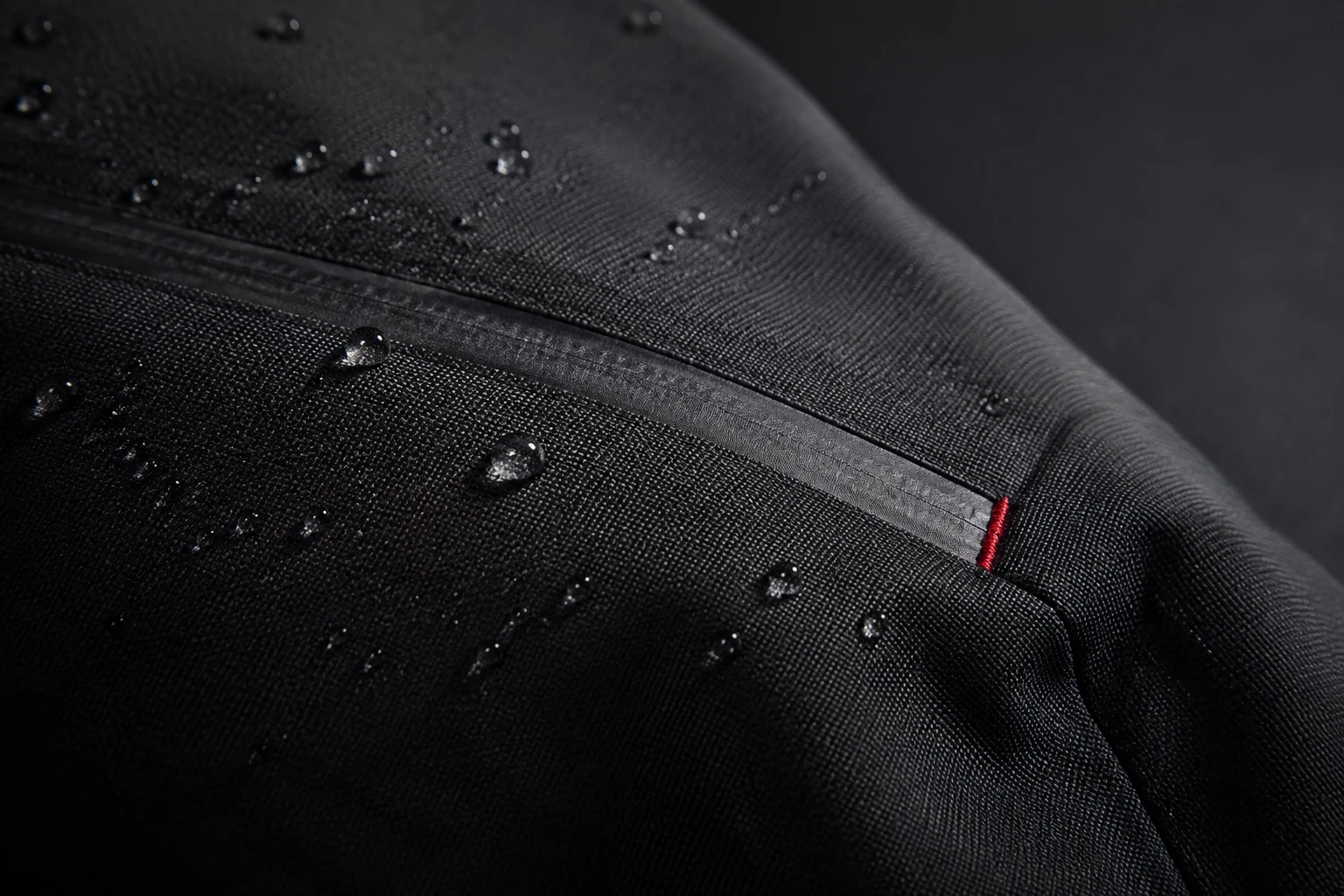
QUANTUM-SHELL / MATERIAL STUDY
Shell surfaces, bonded seams, and articulated coverage.
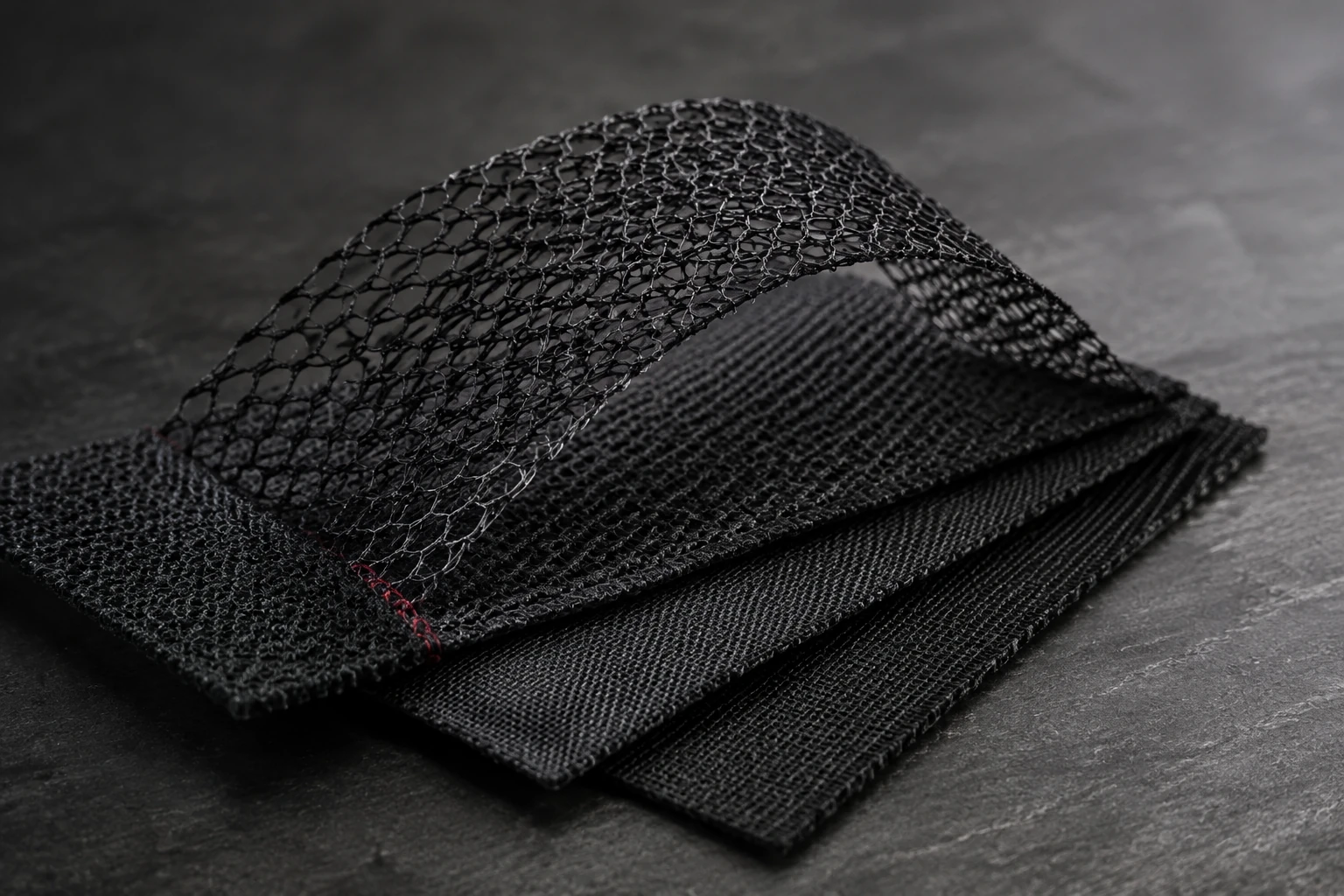
GRAVITY-LESS / MATERIAL STUDY
Open textile structures and the balance between weight and coverage.
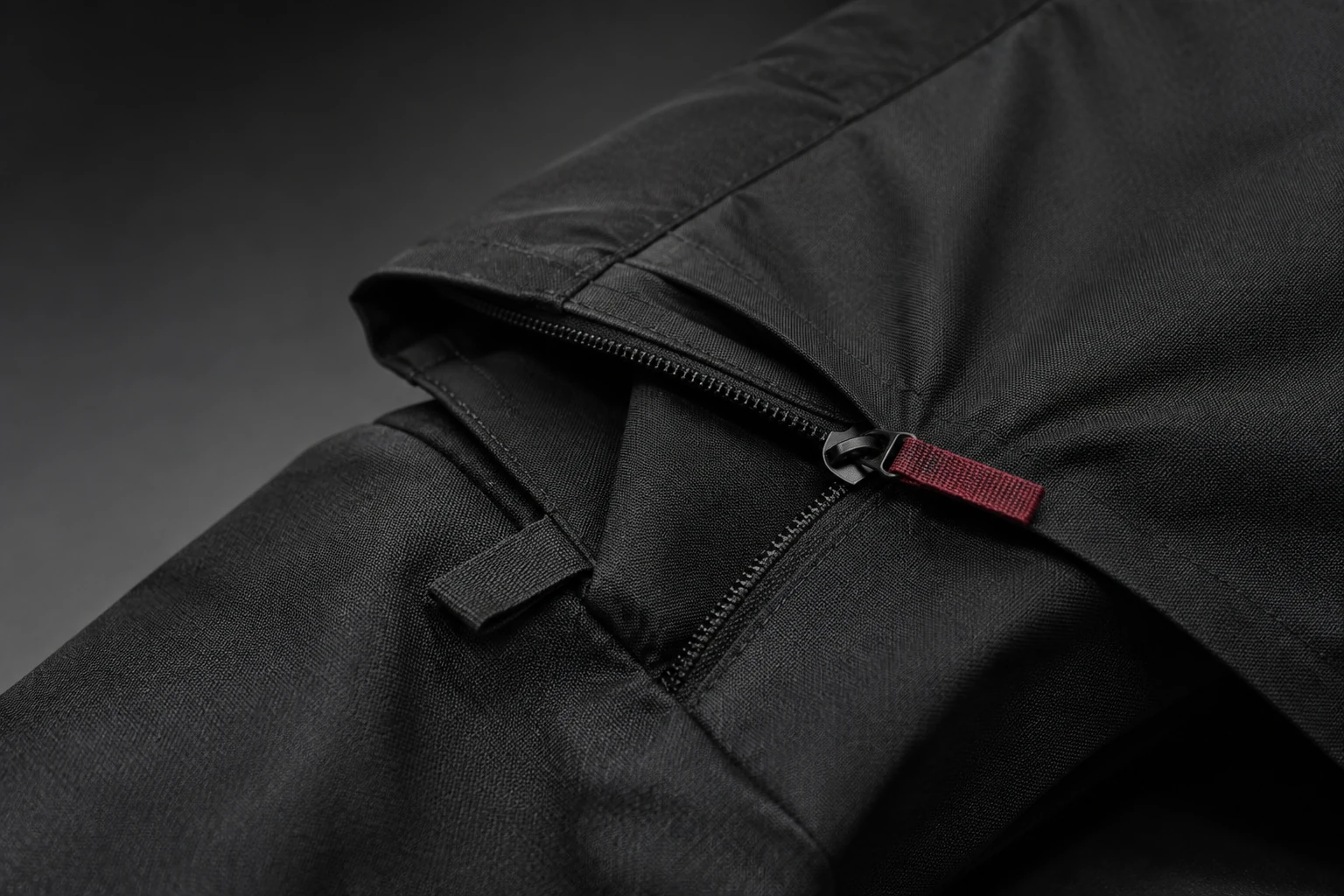
FLUX-HYBRID / MATERIAL STUDY
Removable panels and low-profile connections between layers.
Design studies illustrating research directions. Materials and construction shown are visual explorations, not manufactured or tested prototypes.
The MK.I studies define families of torso panels, articulated limbs, directional bands, protective elements, outer panels, and modular connections.
The next step is to translate that framework into patterns and material trials, then evaluate how the pieces behave together.
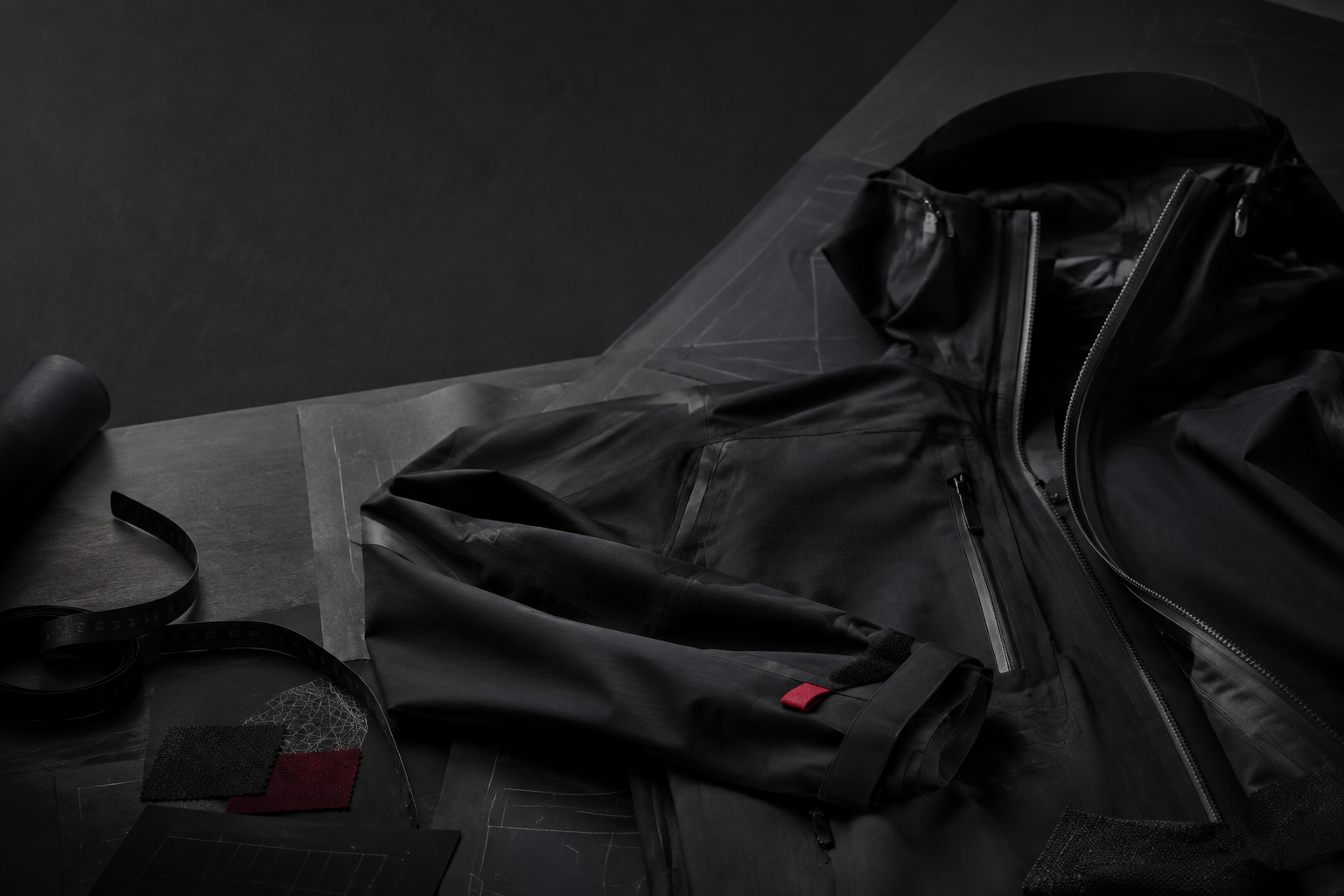
RESEARCH & THE COLLECTION
The EXO Motion Jacket, Pants, and Motion Base Layer explore the collection’s design language. They are design concepts; the EXO-MOTION assistance module is a separate research direction whose effects remain to be tested.
[ 04 ]DEVELOPMENT METHOD
The path from a design framework to a feature worth wearing.
Map the activity, joint movement, contact points, and areas of exposure. Turn each observation into a specific design question.
Translate the question into panels, material combinations, and construction trials. Develop prototypes around measurable objectives.
Compare prototypes with a defined baseline. Assess comfort, movement, construction, and durability under repeatable conditions.
Use the findings to revise the design and its interfaces. Carry a feature forward when the evidence supports its intended role.
[ 05 ]RESEARCH COLLABORATIONS
For textile specialists, pattern makers, manufacturers, and researchers interested in exploring the framework with OVERKOME.
Tell us about your expertise, the module that interests you, and the question you would like to investigate.
Discuss a collaboration Developing a product for your brand?